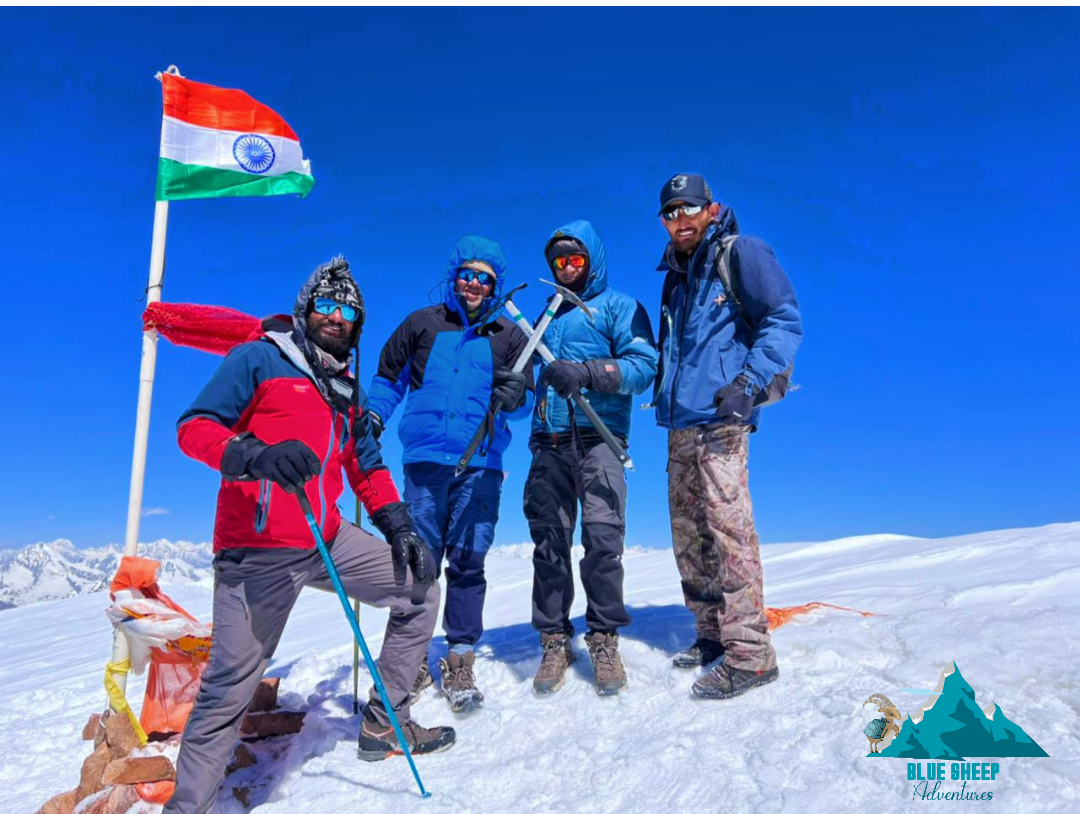
The summit was never the point. The point was getting eight people up there — and bringing all eight back down. That's what being an expedition leader actually means.
How Kang Yatse 2 Gets Under Your Skin
Kang Yatse 2 sits at the head of the Markha Valley in Ladakh, visible from the camp at Nimaling if the sky is clear enough. The first time I saw it — on a reconnaissance walk two seasons before leading the expedition — it looked almost easy. Clean ridgeline. Obvious approach. No glaciers to navigate until the upper section. I made a mental note and thought: that's a mountain I want to lead.
I should have known that mountains that look easy from a distance are the ones that teach you the most. Kang Yatse 2 doesn't ambush you with technical difficulty. It ambushes you with relentlessness. It keeps going up for longer than your body thinks is reasonable, at an altitude where reasoning itself becomes unreliable.
Building the Team Right
Eight members. Mixed experience levels — which is almost always the case on a commercial high-altitude expedition. Three had been above 5,500m before. Two had done only moderate treks and were pushing significantly beyond their previous ceiling. Three were in the middle: fit, motivated, but unknown quantities at altitude.
My job before a rope was even coiled was to understand each person's ceiling — physical, psychological, motivational. I spent the first three days of acclimatization walks not just monitoring AMS symptoms but watching how people responded to discomfort. Who pushed through? Who complained loudly but was fine? Who went quiet and internalised everything (the ones who need watching)? Who deflected with humour? These patterns matter above 5,000m when decisions have real consequences.
"The real work of expedition leadership happens at the dinner table at basecamp, not on the summit ridge. By the time you're in crampons, the team either trusts you or they don't."
The Acclimatisation Strategy
We followed the Markha Valley route, which gives you an almost textbook acclimatisation profile if you don't rush it. Chilling to Skiu on Day 1 — easy walking, 3,450m. Skiu to Markha on Day 2, crossing the first high point at around 3,900m. Markha to Hankar on Day 3, sleeping at 4,000m. Hankar to Nimaling on Day 4, sleeping at 4,750m. That's where the altitude starts to become real for most people.
Two members woke at Nimaling with headaches significant enough that I kept them on rest the following day while the rest of us did a rotation to 5,100m for conditioning. Both recovered. We didn't cut corners on the rest day — I've seen too many expedition leaders push through early AMS symptoms and pay for it on summit day when they're managing a rescue at 5,800m instead of climbing.
Camp I and the Night Before the Push
Camp I sits at around 5,600m on the moraine above Nimaling. Getting there requires crossing a glacier — not technical, but tiring at that altitude, and the footing demands full concentration. We established camp in early afternoon to allow the team time to rest before the 2am alpine start.
No one sleeps well at 5,600m. The body doesn't want to. Breathing is laboured, the sleeping bag feels simultaneously too hot and not warm enough, and the mind runs over summit logistics in the way anxious minds do. I lay in my tent listening to the team in theirs — quiet, which is good. Quiet usually means people are okay. Noise — coughing, restless movement — is what you listen for.
At 1:30am I was up, making tea on the gas stove, checking the sky. Clear. No wind at camp level, though I could see a light plume off the summit ridge. Manageable, if it stayed light.
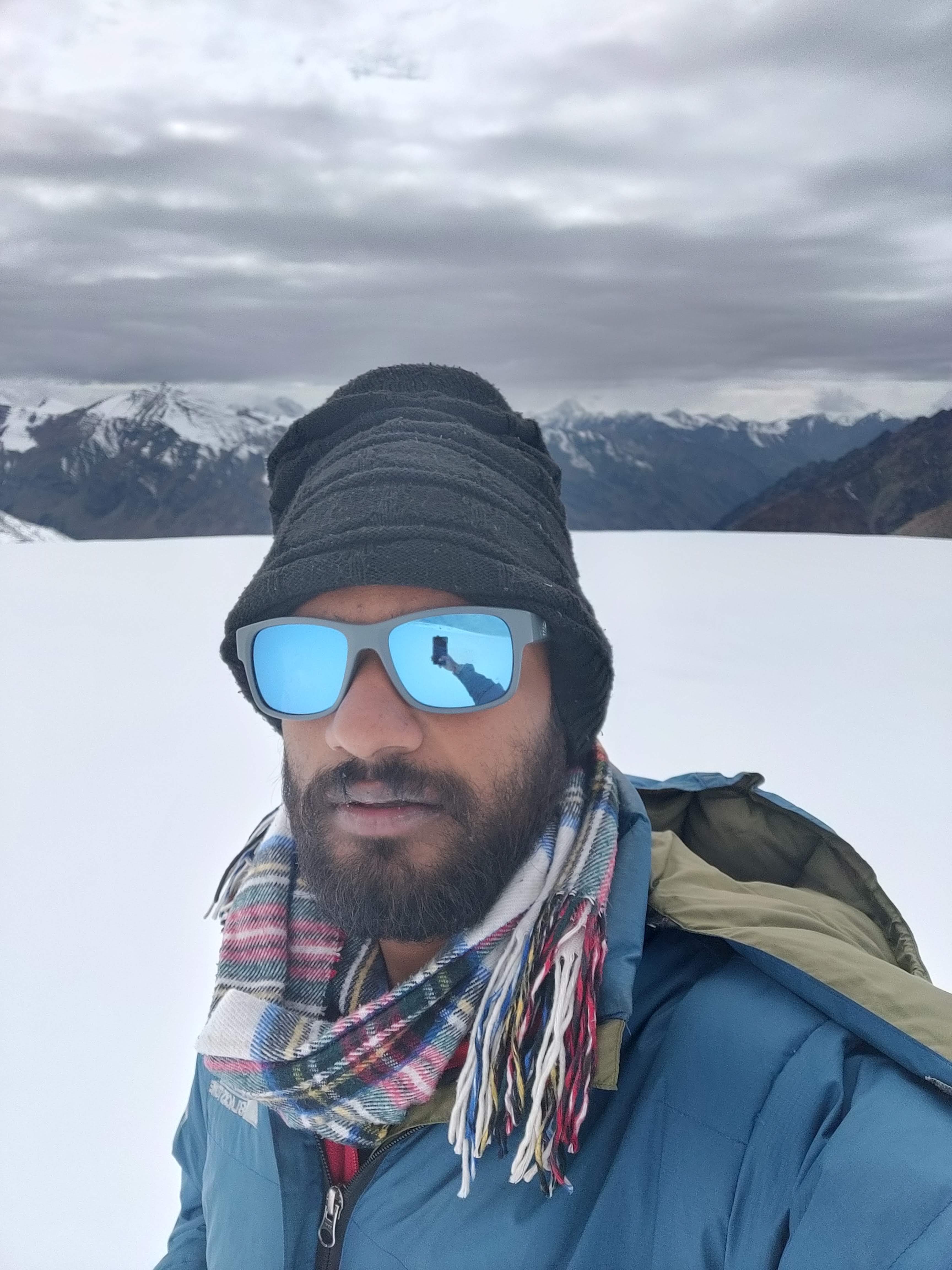
Pre-summit camp. The altitude strips everything down to what matters.
The Summit Push
We roped up in three groups just above camp and moved into the dark. Headtorch beams on snow. The pace is slow by design — sustainable, not impressive. There is no room for ego in the first two hours of an alpine start. You eat your calories, you keep moving, you breathe.
By the time we hit 5,900m, two members were struggling noticeably. One — I'll call him R — had been moving well all expedition but was now stopping every 50 metres, bent over his poles. The other — S — was moving mechanically, which either means they're fine and in the zone, or they're dissociating from the effort and running on empty. I moved up to S first. Direct question: how's your head? Clear? His answer was measured and lucid. He was okay. Tired, but okay.
R was different. His breathing had a quality I've learned to read — not just exertion, but distress underneath it. I made the call at 5,950m: R turns around with one of my support staff, rests at Camp I, descends to Nimaling in the afternoon. The call took thirty seconds to make and felt like longer. R understood. He didn't argue, which told me everything I needed to know about the kind of person he is.
"Turning someone around at 5,950m when they want to summit is one of the harder things this job asks of you. Getting it right is what the job is about."
The Final 300 Metres
The technical section begins around 6,000m. Fixed ropes on the steeper rock band that guards the summit. Prussiks and a basic understanding of using fixed protection — every member had been briefed and trained on this before leaving Leh. The moves themselves are not difficult. At 6,100m with thin air and tired arms they require everything you have.
The summit of Kang Yatse 2 is not a pinnacle. It's a broad ridge, maybe fifteen metres of usable space, with a steep drop on the Markha side and a long view north into the Zanskar ranges. We got there at 8:40am, seven of the eight of us. The light was extraordinary — that particular quality of Ladakhi morning light that makes everything look like it's been cut from something.
I've been asked what it feels like to stand at 6,250m. The honest answer is: it feels like relief. Relief that the mountain let you up. Relief that your team is standing next to you. And underneath that, something quieter — a particular kind of clarity that altitude and effort and responsibility combine to produce. The mountains don't give you that feeling often. When they do, you don't forget it.
What I Took Back Down
R was waiting at Camp I. He was disappointed — genuinely so — but he'd made tea for everyone coming down, which said everything. He summit-pushed on Yunam Peak four months later and stood on top. That's the right ending to that story.
What the Kang Yatse 2 expedition reinforced for me as a leader: the mountain is a test environment, but the real exam is the team. How you build it, how you read it, how you make decisions that prioritise safety over summit glory — that's the actual skill. The climbing is the easy part. Anyone fit enough can learn to climb. Learning to lead people in mountains, to hold their safety in your hands without letting that weight paralyse you, takes years of practice and a willingness to keep getting it wrong until you get it right.
Kang Yatse 2 is my highest personal summit to date. I'm not in a hurry to chase the next number. I'm more interested in understanding what the mountains have to teach — about decision-making, about responsibility, about what people are capable of when they're helped to find the edges of themselves.