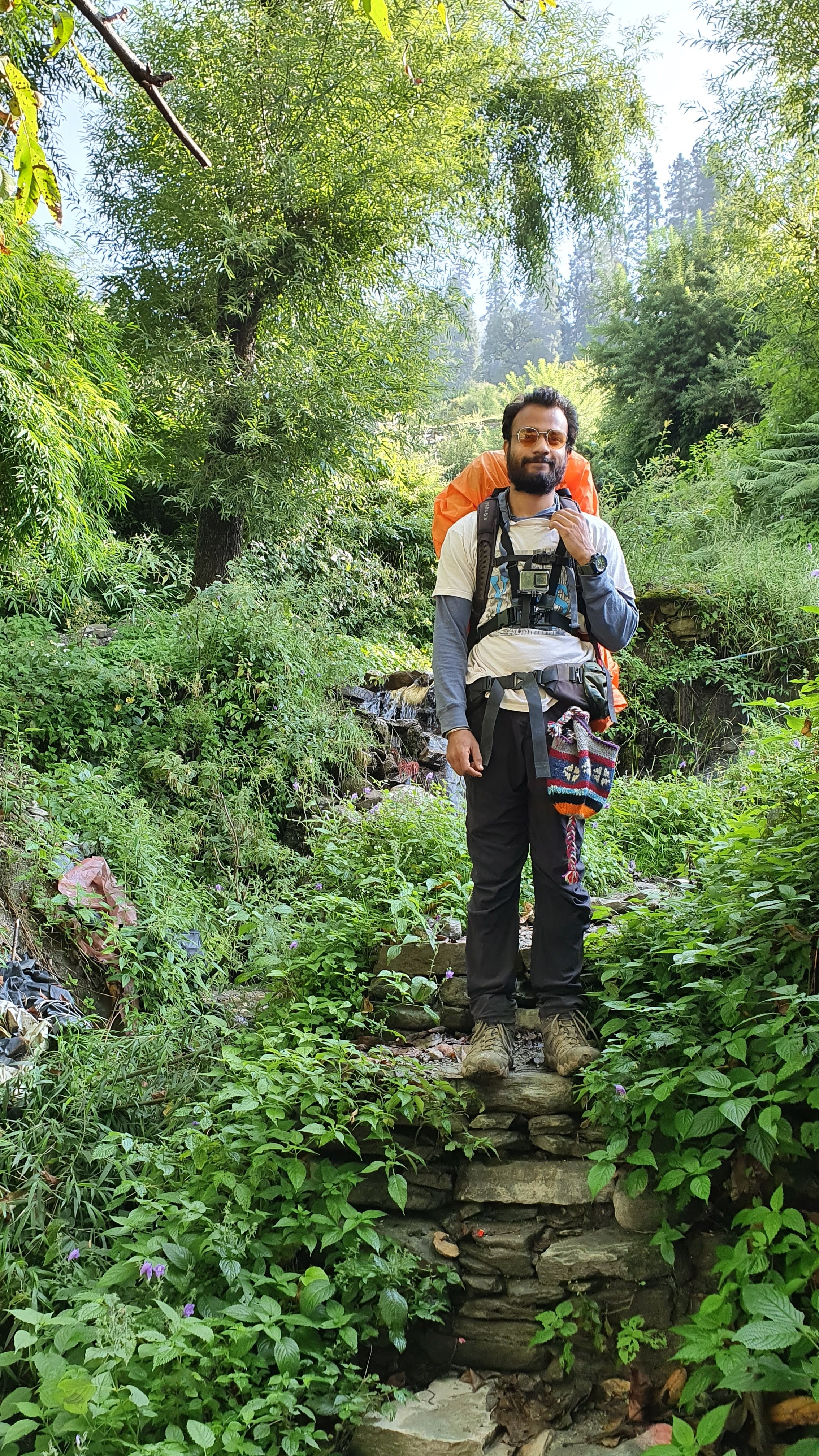
I've led school groups through these mountains for years. I've watched twelve-year-olds from south Indian cities discover that they're braver than they thought they were. It happens somewhere on the second day, usually on the first steep section of trail, and it's one of the most reliable things I know.
What Actually Happens on the Trail
Parents send their children on Himalayan treks expecting the obvious things: fresh air, exercise, scenery, a break from screens. They get all of that. What they don't expect — what nobody warns them about — is what happens to their children's sense of themselves.
Put a thirteen-year-old on a trail that goes steeply up for three hours, with a pack on their back and no signal on their phone, and something fundamentally important begins to happen. The usual social hierarchies of the classroom — who's popular, who's athletic, who's got the best grades — stop mattering. On the trail, the question is simpler: can you keep moving? And almost universally, the answer is yes. But the child doesn't know that until they've done it.
"The child who cries at the base of the first steep section and reaches camp at the top — that child has learned something that no classroom can teach. They've discovered the edge of themselves, and that they can go past it."
The Things the Trail Teaches That School Cannot
Genuine self-reliance. In a school or home environment, help is always close. On a multi-day trek, you carry what you need. If you forget your rain jacket, you get wet. If you don't drink enough water in the morning, you feel it at 2pm on the climb. The consequences are real and immediate. For a generation of children raised with on-demand assistance, this is revelatory.
Group accountability. The slowest member of the group sets the pace for the group. Full stop. There's no way around this on a Himalayan trail — you don't leave people behind. I've watched groups of competitive teenagers, initially frustrated by a slower member, eventually become that person's loudest supporters. I've watched the slow member become something else too: the person whose persistence the whole group eventually admires most.
Tolerance of discomfort. Cold mornings, tired legs, simple food, shared tents. None of it is extreme. All of it builds what I'd call physical resilience — the understanding that discomfort is temporary and manageable, not something to be immediately eliminated. This is, in my view, one of the most valuable things a young person can learn and one of the hardest to teach in a climate-controlled building.
Attention. When you're walking through a Himalayan valley, there is a lot to pay attention to. The trail itself demands it — loose rocks, exposed edges, river crossings. But beyond the practical attention, children start to notice things: the way the light changes on a snow peak at 5pm, the sound a river makes when it's running high, the different textures of rock. Attention is a skill. The trail is an outstanding teacher of it.
What Schools and Parents Get Wrong
The most common mistake is comfort-first planning. Schools, understandably anxious about parent complaints and liability, sometimes over-mitigate the outdoor experience. The hotels get upgraded. The walking distances get shortened. The challenge gets managed away. The result is a trip that's pleasant but forgettable — tourism with hiking boots, not experiential learning.
The second mistake is treating the outdoor experience as a break from education rather than a form of it. The best outdoor programs I've designed integrate reflection — campfire conversations about what was hard today, what surprised you, what you want to try tomorrow. Without that reflection loop, the experiences don't fully metabolise. Children do something difficult; they need to have a conversation about it to understand what they've done.
The third mistake is mismatching challenge to age and group. A fifteen-year-old's Himalayan experience should look very different from a twelve-year-old's. The physical demand, the degree of independence, the complexity of the navigation — all of these need to be calibrated. Too easy and the experience is trivial. Too hard and it traumatises rather than builds. The calibration is the skill of outdoor program design, and it's harder than it looks.
What I've Seen Change
I've had students come back to contact me years later to say that a particular moment on a trek — usually not the summit, usually something smaller, a moment of helping someone else or pushing through something they thought they couldn't do — stayed with them. That it showed up later in an exam they almost gave up on, or a job interview they nearly didn't take.
I'm not making extravagant claims for outdoor education. The Himalayas don't fix everything, and a five-day trek doesn't transform a person. But it plants something. A seed of a different understanding of what they're capable of. In the right conditions — the right program design, the right facilitation, the right group — that seed grows.
If you're a parent thinking about a Himalayan experience for your child: do it. Find a program that takes the challenge seriously, that doesn't over-comfort, that builds in reflection. Send them somewhere that will ask something of them. The best thing I've given the children I've worked with isn't the view from the top. It's the walk that got them there.